
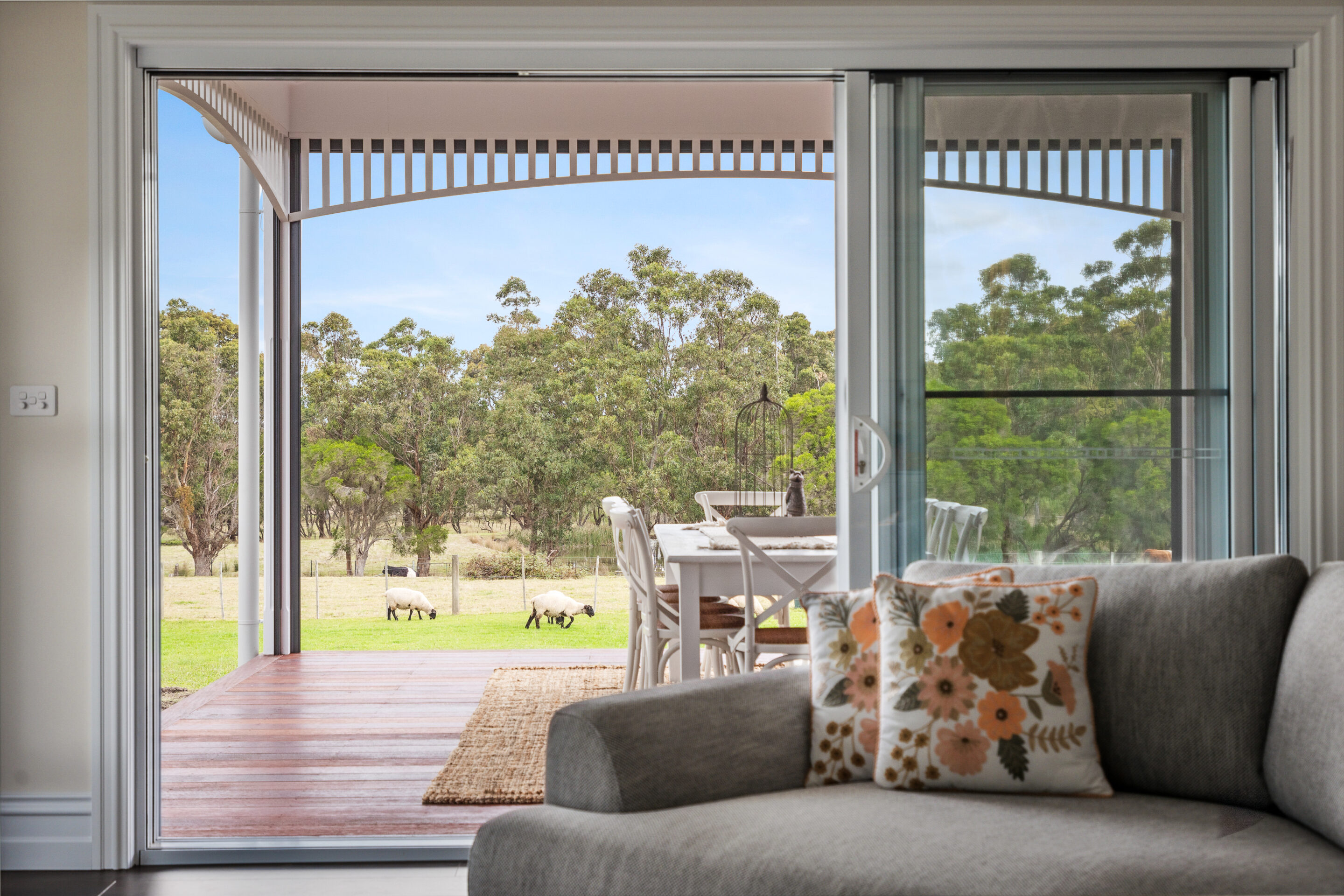
When you build a home in the Yarra Valley, you’re doing more than creating a place to live, you’re choosing to live within one of Victoria’s most picturesque regions. Rolling vineyards, mountain backdrops, filtered forest light and big country skies all shape the unique beauty of this landscape. And when thoughtfully designed, your home can frame and celebrate these views every single day.
Thoughtful design can help your custom home embrace the Yarra Valley landscape. From the first decision about where to place your home on the land, to window positioning, indoor-outdoor flow, and materials that harmonise with the natural setting, the right approach creates a home that doesn’t just face the view, but truly belongs within it.
Start with the Land
Every block in the Yarra Valley has its own personality. Some are gently undulating, others steep or wooded. Before thinking about the floorplan, it’s important to spend time on-site and observe the landscape. Where does the sun rise and set? Where are the best long-range views? Which parts of the site feel sheltered, exposed, private or open?
Understanding your block’s topography, microclimate and outlooks is the first step to aligning your home with its natural assets. A north-facing slope, for example, can capture both winter sun and sweeping views, ideal for passive solar design.
Orientation is Everything
The orientation of your home impacts not only how well it captures views, but also how it feels to live in. Ideally, main living areas should face north to bring in natural light and warmth, while bedrooms and utility zones can sit to the south or be more protected.
By carefully aligning your home, you can:
- Maximise morning sun in the kitchen or dining area
- Frame views of nearby ranges or tree lines from the living room
- Create shaded outdoor areas that still enjoy an outlook
Good orientation also supports energy efficiency by reducing the need for artificial lighting and mechanical heating/cooling.
Window Placement & Glazing Choices
Large windows and glazed doors are a natural choice when you have beautiful surroundings, but they must be used thoughtfully. Strategic window placement can:
- Highlight a specific view like a distant ridgeline, vineyard or lake
- Create a sense of spaciousness by extending sightlines
- Provide visual connection between indoor and outdoor zones
Consider using floor-to-ceiling glazing in living areas and clerestory windows to bring in light from above without compromising privacy. In bushfire-prone areas, BAL-rated glazing will be essential, and there are beautiful high-performance options available that don’t sacrifice design.
Seamless Indoor-Outdoor Living
Outdoor zones are just as important as your home’s interior when it comes to enjoying the landscape. Covered decks, courtyards, and verandahs can all provide places to soak up the scenery.
In the Yarra Valley, consider how these spaces function across the seasons. A sheltered deck with a view of the hills might become your go-to winter morning coffee spot with the right orientation and wind protection.
Framing the View, Not Fighting It
A well-designed home doesn’t compete with the landscape, it collaborates with it. That might mean:
- Designing a stepped home that follows the contour of a sloping site
- Using low-profile rooflines to keep sightlines open
- Selecting exterior materials and colours that reflect the natural palette
This integration not only makes your home more beautiful, but also more grounded and resilient.
Building With the Landscape in Mind
Designing for views is about more than big windows and nice backdrops. It’s about honouring the landscape by creating a home that feels like it belongs, one that supports your lifestyle while connecting you to nature.
As experienced custom home builders in the Yarra Valley, we understand the nuances of designing for challenging blocks, changing light, and cherished vistas. If you’re planning a home that captures more than just square metres, let’s talk about how to design a home that truly lives in harmony with its surroundings.