Architecturally designed homes are often associated with striking exteriors or high-end finishes. That’s not what defines them.
They are shaped by how the design is resolved from the outset. In architect-designed homes, decisions are considered together, not in isolation. The home is planned around how it responds to the site, how spaces are organised, and how light, movement and connection are handled throughout.
When this level of consideration is applied, the result is a home that feels cohesive, comfortable and easy to live in. Without it, the gaps start to show. Layouts that looked good on plans can feel awkward in use, and comfort often depends on constant adjustment rather than being built in.
To understand what drives that outcome, here are the design principles behind it. Get them right, and the home works with you, not against you.
1. Site-Responsive Design
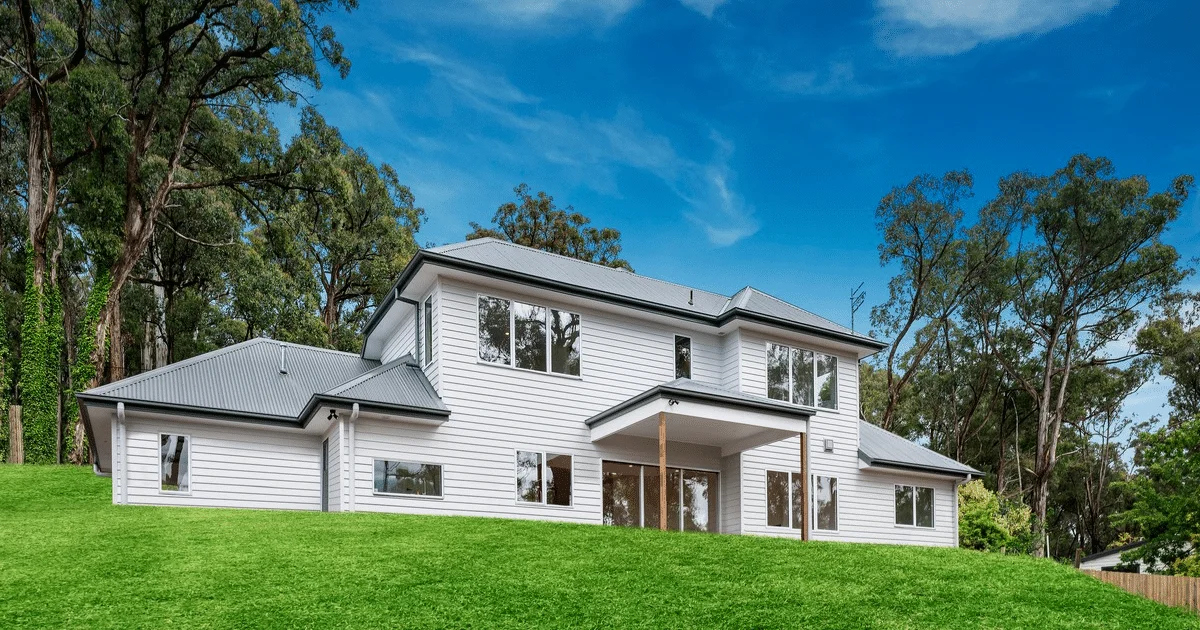
In the Yarra Valley, the land dictates the design. Every time.
Blocks out here are rarely flat or predictable. You’re dealing with slope, shifting light, cool morning fog and harsh western sun in summer. Some sites open up to long vineyard views, others are more enclosed with neighbouring homes nearby. Ignoring those conditions is where most homes go wrong.
This is where architecturally designed homes separate themselves from standard house designs. The site is not a constraint; it’s the starting point of the architectural design.
Site-responsive design means the home is positioned and shaped around how the block actually behaves.
Living areas are placed where they capture consistent natural light and the best outlook. On sloping sites, the home steps with the land instead of fighting it, which avoids heavy excavation and creates more usable, connected spaces. Where privacy is tighter, openings are controlled so you’re not exposed, while still bringing in light and airflow.
This approach is especially important for homeowners planning a forever home, where the goal is not just to suit the site today, but to enhance how the home supports life over decades.
This carries through across the seasons. In winter, you’re getting natural sun into the spaces you use most. In summer, those same areas are protected from heat gain. Outdoor zones are positioned to offer shelter from wind, so they remain usable beyond a few weeks of the year.
When this isn’t resolved properly, the issues show up quickly. Rooms that feel dark or disconnected. Living areas that overheat in the afternoon. Outdoor spaces that are rarely used because they’re in the wrong spot.
When it is resolved properly, the home works with the land instead of against it. It feels considered, comfortable and far more resilient over time. More importantly, it avoids the kind of design decisions that become frustrating to live with once the novelty wears off.
2. Passive Environmental Design

Comfort in a well-designed home is resolved in the design, not managed day to day.
Passive environmental design looks at how the home responds to light, heat and airflow, and uses that to maintain stable conditions without relying heavily on mechanical systems.
In the Yarra Valley, that balance is critical. Western sun can push heat deep into the home late in the day, while cooler months can leave spaces feeling flat if they are not positioned to capture enough natural light.
This is a core part of architectural design, where an architect works closely with clients to ensure the home performs properly before construction even begins.
A well-considered design addresses this through a set of deliberate decisions:
- Living areas are oriented to the north to capture consistent natural light where it matters most
- Eaves and external shading are designed to control how much sun enters throughout the year
- Openings are positioned to encourage airflow, allowing heat to move through rather than build up
- The building envelope is designed to maintain a steady internal temperature, reducing sharp shifts as conditions change outside
These decisions shape how the home performs across the day. Spaces remain comfortable into the evening instead of overheating, and air moves through the home in a way that keeps it feeling fresh.
This has a direct impact on daily living, especially for a young family, where comfort, consistency and ease of use matter far more than relying on systems to correct poor design.
You notice it in how consistently usable each space becomes. Rooms don’t fall out of favour because they are too hot or too cold. The home feels balanced, without needing constant adjustment to stay that way.
Start Planning Your Dream Home
Thinking about building a custom home? Our team can guide you through design, planning, and construction.
3. Spatial Planning and Zoning
How a home is organised determines how well it works, day in and day out.
It comes down to separating spaces based on how they’re used. Active areas for living and entertaining, quieter zones for rest, and more private areas that are removed from the day-to-day movement of the home.
This is where architect-designed homes move beyond generic layouts and begin to reflect how families actually live, not just how rooms are typically arranged.
You notice it in how the home handles overlap. The kitchen, dining and living areas can run at full pace without pushing into the rest of the house. Bedrooms are set back, so early mornings and late nights don’t carry through. If someone’s working from home, they’re not set up in the middle of a busy space trying to concentrate.
Guest areas are handled with the same level of intent. Visitors can settle in comfortably without feeling like they’re part of the main flow or disrupting your routine.
For homeowners coming from previous renovations or older homes, this is often where the biggest improvement is felt. The layout begins to suit their lifestyle rather than forcing them to adapt to it.
Get this balance wrong, and the friction builds quickly. Noise travels, private spaces feel exposed, and some rooms never quite get used the way they were intended.
When zoning is handled properly, the home supports how people actually live. Different parts of the household can operate at the same time without conflict, and the layout continues to work as routines shift over time.
4. Circulation and Flow

You can have a well-planned home on paper, but if movement through it feels awkward, it shows up quickly in day-to-day use.
Circulation comes down to the paths you take without thinking. Walking in with groceries, moving out to the alfresco when you’ve got people over, or heading from bedrooms into shared spaces. If those paths aren’t resolved early, you feel it every time you use them.
This is where spatial flow becomes critical. It’s not just about layout, but how each part of the home connects and supports movement without interruption.
It tends to show up in small frustrations. Cutting through the living room just to get somewhere else. Doubling back because the connection isn’t direct. Outdoor areas that look close on plan but feel disconnected once you’re actually using them.
A strong layout keeps movement clean and direct. Entry points lead naturally into the home. The kitchen sits where it can connect easily to both indoor and outdoor living. Pathways are wide enough to move through comfortably, even when more than one person is using them, and key spaces aren’t constantly interrupted by foot traffic.
It becomes especially noticeable when the house is full. People can move between spaces without crowding each other or disrupting what’s happening around them, whether it’s a quiet morning or a full weekend with guests.
Good circulation doesn’t draw attention to itself. It quietly supports everything else happening in the home, which is exactly why it matters.
5. Daylight and Spatial Experience
Natural light has a way of exposing whether a home has been properly thought through or not.
You see it straight away when you walk in. Some homes feel flat, even if they’re well finished. Others feel layered and alive, and it usually comes down to how light has been handled.
This is a defining characteristic of architecturally designed homes, where light is treated as a core element of architecture rather than something added at the end.
It’s not just about placing windows on external walls. It’s about how light is drawn into the centre of the home, how it reaches spaces that would otherwise be overlooked, and how it shifts across the day.
This usually comes down to a few key moves:
- Bringing light into the centre of the home, not just the perimeter
- Using skylights or voids to bring light into darker or enclosed areas
- Allowing light to carry between spaces, rather than stopping at walls
- Balancing light from multiple directions to avoid harsh contrast and glare
Hallways are a good example. In a standard layout, they’re often dark and purely functional. When they’re designed to pick up light from above or adjoining spaces, they start to feel like part of the home.
Living areas follow the same thinking. Light coming from more than one direction softens the space and makes it far more comfortable to use throughout the day, without constantly adjusting blinds or relying on artificial lighting.
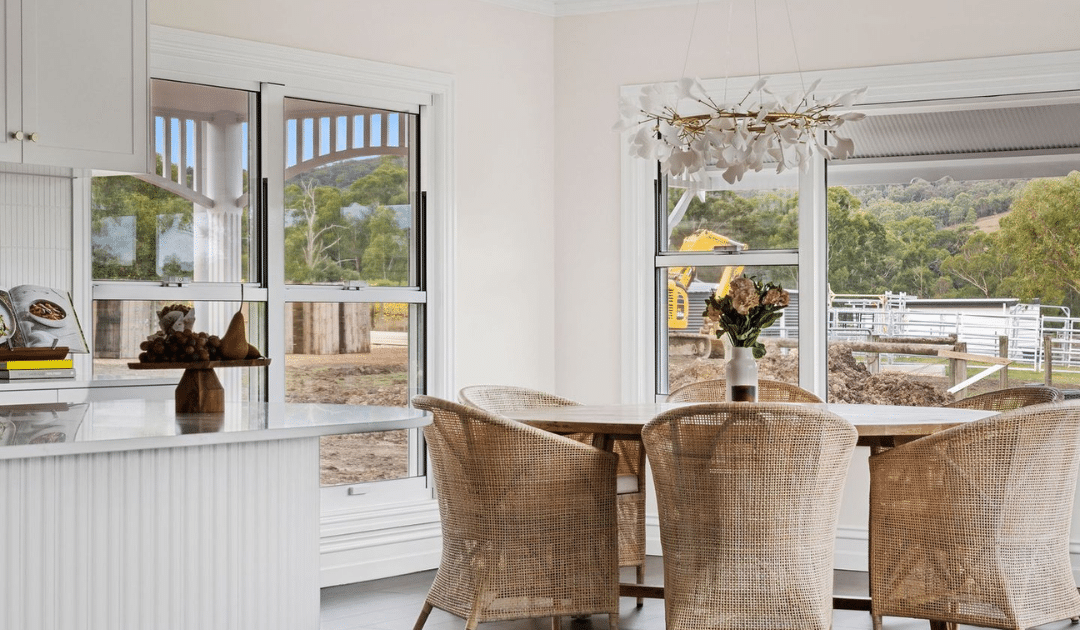
Across the home, this creates a strong connection between interior spaces and the outside landscape, reinforcing the relationship between the house and its surroundings.
Over time, you start to notice how different parts of the home come into their own at different times. Morning light in the kitchen, softer light settling into living areas in the afternoon, quieter spaces that naturally feel more subdued as the day winds down.
It gives the home a sense of depth that continues to influence how it’s experienced long after the design is complete.
6. Indoor-Outdoor Integration

Out here, the line between indoors and outdoors shouldn’t feel like a hard stop.
In the Yarra Valley, people aren’t building homes just to stay inside. Outdoor areas are part of daily living, whether it’s a quiet morning outside, long lunches on the weekend, or evenings with people over. If that connection isn’t resolved properly, those spaces go unused.
This is where architecture begins to seamlessly integrate the home with its landscape, creating a stronger relationship between built form and environment.
This isn’t about adding a deck or an alfresco as an extra. It’s about how those spaces are positioned and how easily they connect back to the home.
A small number of decisions determine whether it works or not:
- Living areas open directly to outdoor spaces, without stepping around or through other rooms
- Floor levels are aligned so the transition feels natural, not like you’re stepping out to a separate zone
- Materials are carried through to create visual continuity between inside and out
- Outdoor areas are positioned with shelter in mind, so they remain usable beyond ideal conditions
You notice it when you’re entertaining. People move freely between inside and out without crowding doorways or breaking the flow of the space. Food, drinks and conversation carry across naturally.
It also shows up in quieter moments. Stepping outside doesn’t feel like leaving the house; it feels like an extension of it.
This level of integration is often what defines a dream home, where the house, garden and surrounding landscape work together as one.
Get this right, and those outdoor areas become part of your everyday routine. Not just somewhere you go occasionally, but somewhere the home naturally expands into.
Start Planning Your Dream Home
Thinking about building a custom home? Our team can guide you through design, planning, and construction.
7. Proportion, Scale and Materiality
Some homes feel right the moment you walk in. Not because of any one feature, but because everything sits in balance.
That usually comes down to proportion, scale and materiality.
Proportion is about how spaces relate to each other. Scale is how those spaces are experienced through ceiling heights, room widths and overall volume. Materiality ties it together through the finishes you see and touch every day.
This is where good design moves beyond function and begins to shape the overall style and identity of the home.
It comes through in how a room holds you. Living areas feel open without pushing too far. Bedrooms feel settled rather than tight. Ceiling heights lift where they need to, giving presence to main spaces without carrying that same volume everywhere else.
A number of decisions shape this outcome:
- Room proportions are carefully balanced, so spaces feel comfortable rather than oversized or constrained
- Ceiling heights are varied with intent, adding volume where it matters and restraint where it doesn’t
- Materials are selected as a cohesive palette, not as individual features competing for attention
- Finishes are chosen to age well, so the home settles rather than dates
This is also where choices around materials, interiors and finishes begin to reflect the homeowners’ vision, balancing creativity with practicality and long-term durability.
There’s a clear difference between a home that relies on features to stand out and one that feels resolved at a base level. One asks for attention, the other holds it without trying.
The impact shows up in how the home holds its quality. Spaces remain comfortable to use, materials continue to sit well together, and the overall character doesn’t lose its edge as styles shift.
Design That Actually Improves How You Live
Architecturally designed homes are not defined by appearance alone. They are shaped by decisions that improve daily living, from how light moves through a space to how the home sits on the site.
If you’re planning a family home or a long-term project, take the time to understand these principles early. Work closely with an architect and builder, ask the right questions, and make sure the design reflects how you want to live.
At Cobalt Constructions, we guide homeowners through this process with clarity, ensuring every decision supports comfort, functionality and long-term quality.
Frequently Asked Questions
What makes architecturally designed homes worth considering over standard builds?
Most standard homes are adapted to fit a site. Architecturally designed homes are shaped by it. That shift changes everything. You’re not forcing a layout to work; you’re creating a home that responds to the land, your lifestyle and how you actually live. With trusted builders involved early, the result feels resolved from the outset rather than adjusted along the way.
How involved should homeowners be during the design and build process?
Stepping back completely is where things start to drift. The strongest outcomes come when clients stay engaged in the build process, especially during early design decisions. You don’t need to manage the project, but you do need to be clear on how you live, what matters, and where you’re willing to invest. That clarity carries through to the final result.
Can material selection really impact how a home feels over time?
Materials set the tone long before furniture or styling comes in. In architect-designed homes, selections aren’t made in isolation. Earthy materials, for example, can anchor the home to its surroundings and hold their character as they age. When materials are chosen with purpose, they don’t just look good on completion; they continue to feel right as the home settles into daily use.
What should homeowners prioritise when starting a custom home project?
Trying to solve everything at once usually leads to compromise. A stronger approach is to define what matters most early, how the home needs to function, how it should feel, and where flexibility sits. Every project has constraints, whether it’s budget, site, or timing. Clear priorities help guide decisions and keep the process focused from start to finish.
How do you know if a design will suit your lifestyle long-term?
A design that only suits today rarely holds up. The better question is whether the home can adapt without losing functionality. Families grow, routines shift, and needs change. A well-resolved layout allows for that movement without forcing major adjustments. That’s where thoughtful planning pays off, not just in how the home looks, but in how it continues to support daily life.