
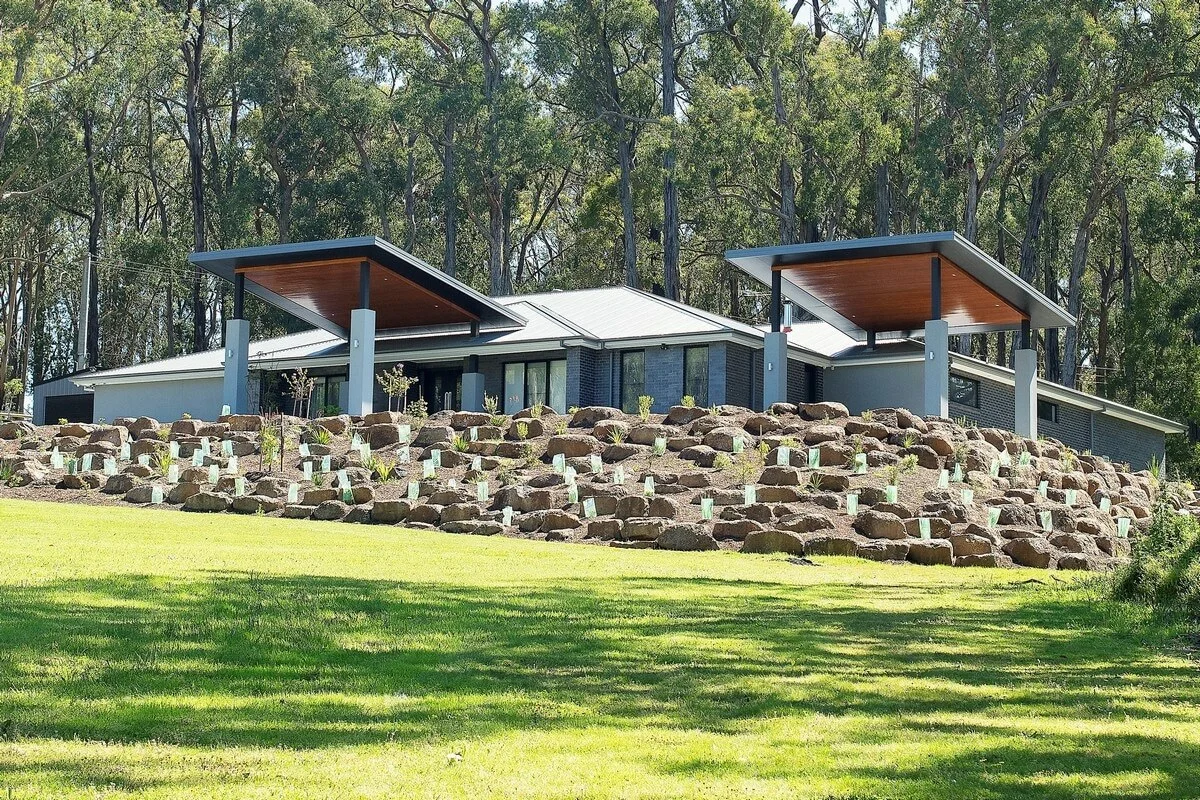
The Yarra Valley’s undulating landscape is part of what makes it so special, rolling hills, elevated vistas, and generous rural blocks that offer space and serenity. But when it comes to building a custom home, sloped or acreage sites present a unique set of challenges. The good news? With the right approach, they also unlock incredible design opportunities.
Whether you’re dreaming of a forever home nestled into the hillside or planning a sustainable build on a wide-open block, here’s what you need to know.
The Unique Challenges of Sloped and Acreage Sites
Site Preparation
Not all land is created equal, something that becomes especially clear when you’re building on a slope or expansive acreage. These blocks offer breathtaking views and a strong connection to nature, but they also come with logistical and design complexities that flat suburban blocks simply don’t present.
Site preparation is often more involved. Sloping blocks typically require cut-and-fill earthworks to create level building platforms, along with retaining walls to manage elevation changes. Specialised footings or stumps are often necessary to ensure your home remains structurally sound on uneven ground.
With larger rural properties, the sheer scale can be deceptive. Long driveways need careful planning for both access and stormwater management. Soil types may vary significantly across a single block, affecting foundation choices. And being further from established infrastructure can impact how easily you connect to essential services like power and water.
Understanding the site’s natural contours, sun orientation, and soil characteristics early on is key. It’s the difference between a seamless build and a series of costly surprises.
Bushfire and Environmental Overlays
In regions like the Yarra Valley, sloped and rural blocks often fall within bushfire-prone areas. This can trigger higher BAL (Bushfire Attack Level) requirements, especially BAL-29, meaning:
- Fire-resistant building materials must be used
- Landscaping must act as a buffer, not a fuel source
Setbacks and water access for firefighting may be required
Solutions That Turn Obstacles into Advantages
Tiered or Split-Level Design
Rather than fighting the slope, work with it. Split-level homes are particularly well-suited to sloping blocks, allowing you to step the home down the hill in a way that feels intentional and grounded.
This kind of layout naturally creates zoning opportunities, such as keeping bedrooms on the upper level and communal living spaces below, without needing to force awkward transitions. Beyond practicality, this approach can lead to striking architectural features. Think soaring double-height ceilings, sunken lounges, or a main living area that opens up to sweeping views across the valley. Instead of trying to flatten the land, split-level design embraces its character and transforms challenges into something beautiful and functional.
Sustainable Site Planning
Sloped or acreage sites often offer excellent solar orientation. With passive solar design, you can:
- Position north-facing living areas to capture winter sun
- Use thermal mass (like rammed earth or polished concrete) to regulate temperature
- Harness cross-ventilation to reduce cooling needs
Rainwater harvesting, natural drainage swales, and greywater reuse can also be easier to implement on larger sites, aligning beautifully with off-grid or eco-conscious living.
Strategic Landscaping and Access Design
On a sloping block, landscaping and access need to be more than just aesthetic, they have to work hard. Multi-level gardens planted with low-maintenance natives can help stabilise the soil and reduce erosion. At the same time, features like swales or rain gardens are practical tools for managing runoff, especially during heavy rain.
Access also requires careful planning. Steeper sites may need terraced or curved driveways and pathways to ensure safe, reliable entry. Done well, these elements don’t just solve practical challenges, they help the home feel anchored to the land, rather than imposed on it.
Design Opportunities You Won’t Get on a Flat Block
There’s a reason so many custom home clients fall in love with these blocks.
- Uninterrupted Views – Elevated homes can frame vistas of vines, valleys, or distant ranges.
- Natural Privacy – Strategic positioning and elevation reduce the need for high fences or screening.
- Architectural Character – Homes on sloped sites often feature more creative rooflines, volumes, and materials, making them stand out (in a good way).
And for those on acreage: think of the long-term potential. Home offices, secondary dwellings, workshops, and orchards, all possible down the track.
What to Ask Your Builder
If you’re considering a sloped or acreage site, look for a builder who:
- Has experience in rural or terrain-sensitive design
- Understands the Yarra Valley council overlays and bushfire compliance
- Collaborates early with architects or designers to shape a home around the land, not the other way around
Complexity Can Be Beautiful
Yes, sloped or acreage blocks are more complex to build on. But that complexity is also what makes them special.
With thoughtful design and the right construction team, the very things that make your block challenging are the same things that will make your home extraordinary.
If you’re ready to explore what’s possible, we’d love to help you bring your vision to life, grounded in the beauty of the land beneath it.


