
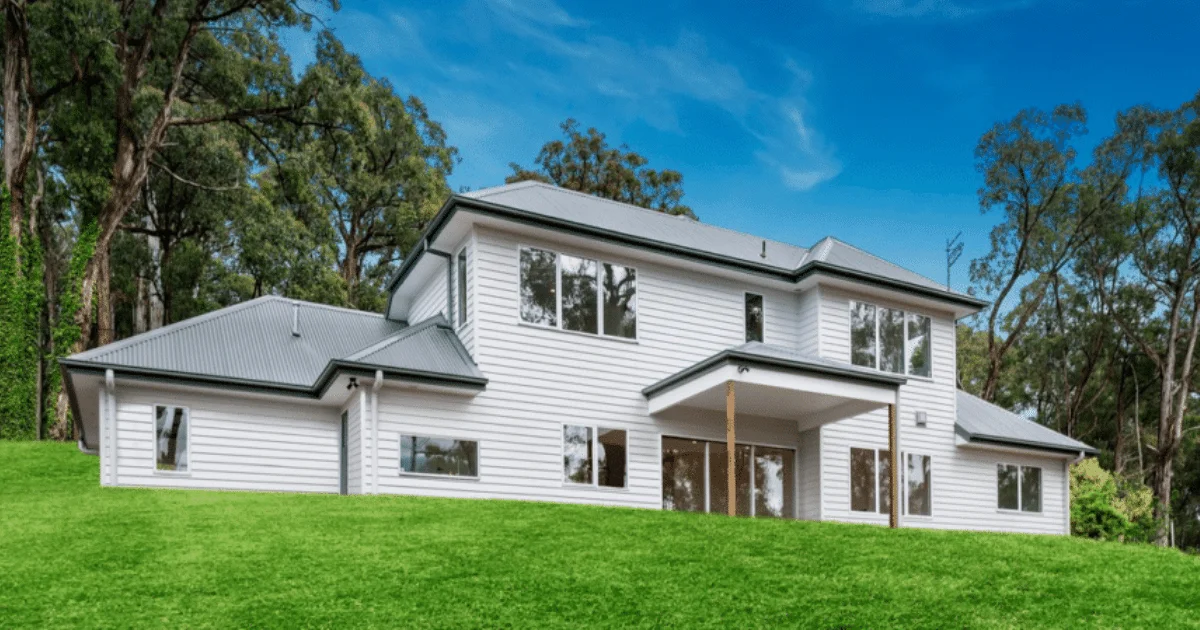
A lot of homeowners love the idea of building on a sloping block right up until the practical conversations start happening.
You might already have a clear vision for the home. Then suddenly, you’re hearing things like retaining walls, excavation costs, drainage, suspended slabs, and difficult site access. Before long, you start wondering whether the slope is going to blow out the budget or force major compromises on the design you originally wanted.
That’s usually where steep-site experience starts separating builders.
Building on steep land is not necessarily a problem, but it does require a different way of thinking from the beginning. The builders who handle these projects well are usually the ones who know how to work with the site early, avoid unnecessary complications during construction, and turn the slope into something that actually improves the finished home.
What Can Go Wrong on a Steep Site Without the Right Experience?
Steep-site construction usually leaves less room for surprises than people realise.
On a flatter suburban block, small issues can sometimes be adjusted as construction moves along. On a steep site, one early mistake can start affecting several parts of the project at once.
For example, you might initially think the block only needs a small retaining wall near the driveway. Once excavation begins, it may turn out larger sections of the site need structural support to stabilise the land properly. That can affect both budget and construction timelines very quickly.
Drainage is another common issue homeowners don’t always see coming.
Water behaves very differently on sloping land. During heavy rain, water naturally moves downhill across the site, so poor drainage planning can create problems around footings, retaining walls, garden areas and even future cracking if it’s not handled properly early on.
Access can also become more complicated than expected.
On some steep blocks throughout the Yarra Valley, getting machinery onto the site is not as simple as driving straight onto the land. A concrete truck, crane, or excavator may need additional access planning depending on the slope and the position of neighbouring properties.
Some of the more common issues on poorly planned steep-site builds include:
- Excavation costs increasing after construction begins
- Larger retaining walls than originally expected
- Delays caused by redesigns or engineering changes
- Water runoff problems during wet weather
- Access difficulties for machinery and deliveries
- Excessive cutting into the land that changes the look of the site completely
That’s why steep-site experience matters so much early in the process. A builder familiar with these types of projects is usually identifying potential pressure points before they become expensive construction problems later on.
Experienced Sloping Block Builders Plan Around the Site Early

One of the biggest differences with experienced sloping block builders is how they approach the land from the very beginning.
Instead of seeing the slope as something that simply needs flattening, experienced builders usually spend more time understanding how the home can sit naturally within the site.
Sometimes the smartest solution is not removing the slope at all.
For example, a split-level layout may allow the home to step gradually with the land instead of requiring major excavation across the entire block. That can reduce retaining, preserve more of the landscape, and create a home that feels far more connected to its surroundings once completed.
The planning stage often focuses on questions like:
- Where does natural light move across the block?
- Which areas of the site capture the best views?
- How can access work without heavily reshaping the land?
- Where will water naturally move during heavy rain?
- Can the home follow the slope more efficiently?
These decisions affect much more than the layout itself.
A well-planned steep-site home often feels calmer and more balanced because the home works with the shape of the land rather than constantly trying to fight against it. You can usually feel the difference when walking through the finished space.
Start Planning Your Dream Home
Thinking about building a custom home? Our team can guide you through design, planning, and construction.
Construction on Steep Sites Requires More Coordination
Once construction begins, steep-site projects usually become far more demanding behind the scenes than standard flat-block builds.
Even simple tasks can take more planning.
On a standard suburban site, materials may be delivered directly beside the slab with relatively easy access for trades. On a steep block, materials sometimes need to be moved in stages because machinery access is tighter or parts of the site are harder to reach safely.
There are also more moving parts happening at once.
Retaining walls may need to be completed before parts of the structure can begin. Drainage systems often need careful management throughout construction, particularly during wetter months in the Yarra Valley. In some situations, cranes or specialised equipment may be required just to move materials safely around the site.
This part of the project may involve:
- Staged excavation and retaining works
- Additional drainage protection during construction
- Careful machinery and delivery access planning
- Coordinating trades around limited working areas
- Managing exposed sections of the site during wet weather
- Working closely with engineers as construction progresses
A lot of this coordination happens quietly in the background, but it has a major impact on how smoothly the project runs once construction is underway.
That’s usually where steep-site experience becomes most noticeable. Builders familiar with these projects tend to understand how quickly small access or sequencing issues can affect the rest of the build if they are not managed properly early.
The Best Sloping Block Homes Use the Land as an Advantage

Despite the added complexity, steep blocks often create homes with far more character than flatter sites.
That’s usually why people are drawn to them in the first place.
The elevation can open up views you would never get on lower land. Natural light often moves differently through the home depending on how the site is positioned. Privacy can also improve because the home sits more naturally within the landscape rather than directly alongside neighbouring properties.
Some of the best sloping block homes use the site to create:
- Split-level living spaces with better separation between zones
- Elevated entertaining areas overlooking the landscape
- Large windows positioned towards views and sunlight
- Stronger indoor-outdoor connection
- More architectural character throughout the home
- Better use of natural contours and surrounding environment
For example, a living area positioned slightly higher on the block may capture morning light and valley views at the same time, while lower sections of the home create quieter private spaces connected to outdoor areas.
When steep sites are handled properly, the slope itself often becomes one of the reasons the finished home feels so unique.
Start Planning Your Dream Home
Thinking about building a custom home? Our team can guide you through design, planning, and construction.
The Right Experience Changes the Entire Build
Building on a steep site is rarely straightforward, but the right experience can completely change how the project feels from beginning through to completion.
The way the land is assessed, how the home responds to the slope, and how construction is coordinated all become far more important once the site becomes more complex.
At Cobalt Constructions, steep-site homes throughout the Yarra Valley are approached with careful planning, practical construction understanding, and a strong focus on creating homes that feel naturally connected to the land they’re built on.
Frequently Asked Questions
Are sloping blocks always more expensive to build on?
Not always, but construction costs are usually influenced more heavily by the slope, access and site conditions compared to a flatter block. Some steep sites may require additional excavation, retaining, or structural work, while others can be designed more efficiently by working with the natural contours of the land.
Can you still build a luxury custom home on a steep block?
Absolutely. In many cases, steep sites create opportunities for more distinctive custom homes, particularly when it comes to views, privacy, natural light and split-level design. Some of the most visually impressive homes throughout the Yarra Valley are built on sloping land.
Do sloping block homes take longer to build?
They can, depending on the complexity of the site and how the project is planned. Steep-site construction often involves more detailed engineering, site preparation and staging compared to flatter suburban builds, which can affect overall timelines.
Is it better to cut into the land or build with the slope?
That usually depends on the block itself, the design of the home, and how the site behaves. In many cases, working with the natural slope through split-level design or stepped layouts can reduce unnecessary site disruption and create a home that feels more connected to the landscape.
What should you look for in a sloping block builder?
It helps to look for builders with genuine steep-site experience, particularly on projects similar to your own. Beyond completed homes, it’s important to understand how they approach planning, site assessment, communication, engineering coordination, and construction management throughout the project.